
As we enter 2017 Tom & Tracy take a deeper dive into the questions of if the desktop 3D print market is already, or becoming saturated? What does market saturation really mean anyway? What has it looked like in other industries?
Listen to the podcast here:
3D Print Market Saturation
We’ve started into the New Year now, it’s 2017. Happy New Year! We did an episode last week about some of our predictions for 2017. In a couple of recent episodes, we had touched a little bit on the subject of 3D print market saturation, and if the market is complete saturated or not. I thought we’d take a deeper dive into that today.
First, we should probably define what market saturation means. To me, that’s means when there are a lot of hardware manufacturers or manufactures of one particular aspect of an industry, whatever that might be, in one particular category. Everyone’s playing on tiny little feature upgrades or little market segments, things like that. When you get into that place at which there’s a couple of big guys and a lot of small ones competing for the rest of the market.

3D print market saturation happens when you stop seeing sales rise, but variety of similar products increases in a market niche.
To me, market saturation is when you have reached a point where there’s no longer really extreme growth in your sales due to just putting things out there, filling a pipeline, filling a territory or a market niche. I’ll give an example of this, because we actually know this and have read quite a bit about it recently. I want to take us back to the 1990s when Home Depot and Lowe’s were not all across the country yet. Those companies were growing tremendously fast. If you had that stock, you did really really well. They were growing just because they were opening a new store in a new region and there hadn’t been one before.
Every year, they would have a budget to open so many stores and they would just keep opening them in new regions across the country, probably going from the coast in, or from the big urban areas out into more rural areas. Their actual sales per store and how well they were doing was not always really the determining factor on whether they were making money as a company every year. It was just because they’re going in a new area and putting local hardware stores out of business. That’s when you start measuring a company by percentage year over year, percentage growth and not by profitability.
Fast forward to 2008, 2010 and more recently, they’ve pretty much put stores everywhere across the country that they really had planned to. Obviously, this is a United States phenomenon for those of you that are listening in other countries, this is a US specific issue. Actually, it’s not a US specific issue, it’s a US specific example because they are expanding into other countries and there are growth factors in their international businesses.
The reality is now, you can actually track sort of the profitability and the success or lack of success based on, really, they’re tied more to the US housing market right now. In fact, they saturated the do-it-yourselfers so much that now, they’re actually catering to the business of commercial builders and people that are providing services for home owners.

Home Depot hit their market saturation and saw a significant sales drop. |Image via Scott Lewls
In the case of it, the split between Home Depot and Lowe’s, Home Depot is much more contractor focused. They’ve actually hit a much higher volatile market dip. Whenever the economy dipped and the housing market dipped or that new build dipped, then Home Depot dipped as well. They were poised to weather those storms and they have weathered them, but their profitability dropped by almost 40%, their overall revenue and everything drops. Lowe’s has the same phenomena happen, that they drop, but it’s in the less significant way because they are much more consumer focused than they are. They see Han overall consumer market drop, they don’t necessarily see it when the housing itself drops.
Anyway, I think that’s a really good example of market saturation. You can see the same thing that’s happened across the US with office supply superstores or any of the big box stores. Before they were everywhere, they had explosive growth. Once they saturated that market, then things started to shake out and there were other players that are no longer. There was like Handy Andy and Builder Square that competed with Home Depot and Lowe’s. Really now, it’s just the two big guys.
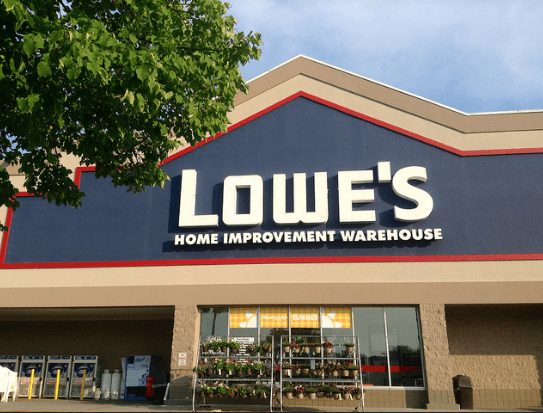
Lowe’s, too, has reached market saturation in the home improvement market. | Image via Mike Mozart
What we’re seeing in terms of 3D print market saturation is the 3D printer market itself. That’s really what we’re going to touch on here because we’re really talking about saturation there. I really think that there’s an opportunity for much more growth. We’ve talked about this in the software side of things because it’s really not good enough yet. There’s really opportunity for innovation and growth there. We’re going to talk about the hardware, the 3D printer side of things and specifically, the consumer 3D printer side of things I want to talk about first. We can talk about the more professional grade ones in just a minute.
The consumer grade ones, there’s about 1,060 printers that are profiled in Aniwaa, which we’ve talked to them before. They are printer a directory or whatever. Honestly, I’d guarantee you a percentage of those, maybe be even 10% or more are dead companies who don’t even sell printers anymore. But that’s what they have listed in their directory. That’s high saturation for a market that’s not that big. How many did we say that MakerBot had sold last year? By June 2016, they had finally sold their 100,000th printer, which to me, I was shocked at how low that number was. That is really low.
If you’re the biggest player in the market, in the consumer side of things, that’s why I wanted to touch on that first because there’s some numbers we know there. We don’t know as many of the numbers on the professional side of things. Let’s just say, 100,000 printers since 2010 when they’re really actively selling them. You’re talking about what is basically six and a half years, they sold 100,000 printers.

MakerBot 3D Printer
It shocked me at how small a number that was. It doesn’t surprise me in the early days of MakerBot when they were still an open source printer and they had their kit printers, like the Cupcake and things like that, that the numbers were smaller because the company was a lot smaller. That was really good sales for them probably to have sold a couple thousand printers in a year. Fast forward to them getting so big in the market and then eventually being bought out and all, still to be the size company they are, market leader. They’ve only had 100,000. It surprised me but it is what it is.
Even still, you like look at the Amazon numbers of the 3D printer sales and things like that, they’re not turning at that higher rate per month and anything like that. Even Jungle Scout, some of the XYZs and other things and see them. The reality is they’re not just turning at the high pace at which you really can sustain that many printer companies, thinking about it that way. Let’s say there’s 1000 printers and everyone has maybe three models. You’re still talking about hundreds of companies. That’s not a big enough market to sustain. We have definitely hit a printer saturation level, especially because I don’t think they’re all that differentiated.
I want to address the enthusiast and hobbyist market in particular because that was really the first market that 3D print printers were sold to and are still sold. People who use them and maker spaces and buy them for their own, they’re home makers and enthusiast, like I said. It’s interesting, I think that that type of a user is always interested in something new that’s coming out and new technology. But I don’t think that that kind of user is always going to jump to buy a new printer when some new feature comes out, with certain exceptions.
Single Extrusion 3D Print Market Saturation and the Pebble Watch
Let’s just take single extrusion 3D printers for a moment. We even know there are new companies, and we can’t go into a whole lot of detail because of confidentiality, but there are some new companies that we’ve talked to in the industry that have been developing a single extrusion 3D printer with, maybe it has a heated bed, maybe it’s less expensive.

Prusa 3D printer is having success in Europe despite the 3D print market saturation.
At the end of the day, they’re reinventing the wheel of a 3D printer that’s being done by all sorts of other companies, Prusa for one is having quite a bit success over in Europe and selling across the world. If you’re a new up and coming manufacturer and you’re not bringing any real new technology or innovation to the industry, that would be a very risky proposition I would think.
Here’s the thing, we talk to them all the time, we’re going to talk to more at CES later this week. The thing is is that what I really hear is they think they’re innovative. This is something that these tunnel vision market views are really part of the huge problem that they have. They don’t see the market saturation, they see that their thing is super cool, it’s better than the next guy. Getting the market to buy it is harder than having good technology. The technology is so unimportant in the scope of things.
I think the days of putting up a new 3D printer on Kickstarter and having a big success are largely over. I think even if you’re going to put it on Kickstarter and you are going to have success there, it’s going to take a lot of marketing dollars to achieve it. I have to say that based on the last couple of years of studies of Kickstarter, I am now absolutely convinced that the numbers show exactly what I’ve been saying all along, that success on Kickstarter is the kiss of death. You will not make a successful company. Pebble was the exception to the rule and it was blowing my theory. Now, Pebble’s gone. They just proves me right.

Pebble watch got the Kickstarter “kiss of death.”
We need to tell our listeners a little about that. For those of you who don’t know, Pebble was a Pebble Watch company, a tech watch. They were the first really to have that smart technology that went between the phone and your watch. They really had superior technology, don’t get me wrong. I think it’s great technology. It always, or was great technology. I always thought it was great. Ugly looking watch, mind you, but all of them were pretty ugly and still are in my mind.
At the same time, they then lowered that price because of Kickstarter so low. They kept having to push themselves down. They had a problem, a perception that they were a tech company instead of a consumer product company. I think this is a huge mistake that 3D print companies are making. You want to tell everybody you’re a tech company because that’s where the venture capital money is, that’s where the dollars are. But it is not where the sales are.
The sales at the end of the day is a consumer product model. If you don’t understand consumer product sales, you don’t understand what it takes to really tip in retail, then you’re making a mistake. That’s where, in my mind, and all the numbers and all the companies I’ve studied on Kickstarter, all the successes there, all of the failures were due to the fact that that Kickstarter audience is not representative of consumer retail. It’s flipped. It’s 70% male instead of 80% female. You have allowed consumer group in forming your product design and forming your future that is not going to actually build your future.
That’s really good point. I want to make sure we close the loop on Pebble and then bring that home and then move on. That is that, Pebble at one point, they were offered a $700 million acquisition, didn’t take it because they insisted they were a tech company. They insisted they were worth more, among other factors I’m sure. Then what ended up happening is they’ve now been acquired for about $40 million. Really it was a fire sale that all the reading I’ve done says that it’s really just because of the value of their IP and retail placements. Obviously, their technology was the most important thing.
Fitbit bought them. Fitbit bought them for $40 million and then said they will not support the Pebble watch any longer. Not one single consumer out there with a Pebble watch has support for that. Clearly, what they were buying it for was the underlying technology that they’re planning to use in their Fitbit products. Anyway, they had two of the most successful Kickstarter campaigns ever in history of Kickstarter. Now, they’re gone. They got out without going bankrupt. That’s about the best you can say. They got out of it without losing their shirts I guess but $40 million compared to the $700 million, they’re probably kicking themselves they didn’t take that original offer.
Anyway, back to 3D print market saturation and single extrusion printers, I think that there is definitely a place for the enthusiast and the hobbyist market. That market’s not going away. All we’re saying is it’s not where the biggest growth opportunity is in 3D printing. There’s nothing wrong with that market. With the RepRap community, everything came out of that. It’s a great thing for sure. We respect it. But in terms of future growth, that’s not where we see it being.

The differences in SoCal Makercon 2015 and 2016 show telling signs of 3D print market saturation.
This is kind of model that is not easy, to figure out how to sell into a consumer product, becoming a consumer product 3D print company is not an easy model. So many have failed at it already. That’s why the Cube is gone. The Cube was clearly a consumer product play and they didn’t know what to do with it. They kept screwing that up. The reality is, is it’s a losing proposition initially. You are going to lose money. You’re going to spend way more money trying to access the market than you are selling into it. That’s just the reality of now.
However, you will eclipse the sale of everybody else’s when the DIY market is so fractured the way that it is right now. I think there’s opportunity in the DIY market but there are going to be niches within that that work. I think we’ve already seen a lot of consolidation, a lot of companies. The difference between SoCal MakerCon in 2015 and 2016, there are a lot fewer companies showing their 3D printers and that were startups and all that.
3D Print Market Saturation and the Niche Market
I want to dive into some niches for a second because I think there are niches of market opportunities that are not saturated yet. I think one of them is in the food 3D printing industry. I think there’s a lot of opportunity there. We’re seeing companies like BeeHex for example that we’ve done a podcast in the past on, we had interview with them. They have 3D printers completely focused on 3D printing pizza. That’s all they’re doing. I think when you go after and own a certain market segment and you see opportunities there, you can have tremendous growth there. It’s tangent to the main market.

No 3D print market saturation in the food 3D printer world – yet. Shown here is a 3D printed heart shaped pizza by BeeHex.
This is the thing, is that they’re not trying to be all things to all people. That’s really critically important here. They are doing what they are doing exactly the way that they should. The best in-practice pizza printer you can possibly imagine, going after all the right people who might want to buy a pizza printer, for all the right reasons. In that, it will be transferrable into the next market they decide to go to because they will have absolute segment success. That segment success and what they’ve learned accessing that segment will be transferrable into the next segment they choose to go after.
Really, they’re building a working model. They’re building a working model. Those that try to do all things to all of the markets at once will fail at them because they can’t devote enough resources into any particular area and they spread themselves too thin.
3D Print Market Saturation – Education Niche
Let’s take education for a second. As of last year, yes, a year ago, and it’ll be interesting to see what happens this year. We’re going to have an episode on this following up CES, which is later this week is when it starts. Take the education market, everybody we talked to at CES last year (2016) said they’re going after the education market. Because I think they saw that as a big growth area. I think eventually, before too long, I would think, within a year or so, I think the education market may get very saturated because you’ve got every school in the country knows that they need to get involved in 3D printing, especially because their industrial arts budgets and departments have been gone for probably 15 or 20 years.
They’re all trying to jump in and get involved in 3D printing because it’s the hot new thing, it’s being called the next industrial revolution. Everybody is going after education market. I see schools, when they buy equipment, they buy it and they keep it for a very long time. They’re not just going to replace it every year because there’s a new advancement in technology. They’re trying to teach a discipline, teach students about the principles of STEM and STEAM and use it within their curriculum. That’s not necessarily always going to need the latest and greatest technology.
My opinion on the education market is actually different. I think it’s a mistake to head into the education market, for so many companies to head into the education market. I think if you don’t have the full service package of materials and support and software and all of those things, logistics and IT management and all of those things, and curriculum. If you don’t have the full package, don’t do it. It’s just a waste of time because when they start adding up the dollars and say, “It’s more than this printer. Now, I have to go out and find this from this company and coordinate this from that company.” It gets too complicated.
Number one, first, it’ll take forever for them to close a sale. You can’t have that kind of cycle. Closing the loop and providing an all in one place with one source is way better business. There will be very few people who will rise to that level of ability to be able to service that. Those are the ones with the deeper pockets. That’s why we see MakerBot and XYZ being some of the main players going after the education market. Although there is a smaller company that has built their entire product, their entire company around the education market. That’s Polar3D.

Student watching her 3D print come to life through the KiraKira STEAM education for girls program.
They were in it from the beginning and they had full service on all of those things. They believed strongly in it, that was their market from day one. They knew that they were building the whole package. They did. They built their Polar cloud and everything really based around making it easy for use in the classroom. In fact, their product itself was refined specifically, all the details of that product are thought out with ease of use in an educational environment.
Durability, safety all of those things. That’s what I’m saying here is that, those kinds of things. The deep pockets and/or deeper resources into those areas are what’s necessary to really get entrenched in it. It’s also a driver you have to be seriously thinking about as an administrator and other things, is they are coming off of looking at what has happened to them and the rest of their IT and their computer technology department and what they have heard very strongly from parents, especially at the middle school level or you get in fifth, sixth grade and you now have this laptop programs and Apple has unarguably won the laptop program.
I think Google’s not bad with the Chromebook but I’m saying they now are trying to take over where Apple got in and they got in well. Why? Because parents wanted something that was so easy, so simple, full package, everything you had. You could walk into an Apple and get the thing fixed, it was all setup, it was all secure, everything came all packaged together. You just had to write a check. It was all supported throughout the school, throughout the district. If your kids switched schools or they went from fifth grade and then all the way into their middle school, they were still supported with the same laptop that was going to last that long. They weren’t buying something that was only going to last a year.
This is something that was going to get them all the way into high school. In high school maybe they got a much more upgraded model of whatever it was they were looking for but they were ready for it. That’s really where I see these school administrations and parents groups are coming off of that going, “You know what, you guys aren’t ready yet. If I’m not going to be able to support this at home, have one at home, have the same thing, if it’s not a consumer package at the end of the day also, then why are we doing this?”
Anybody who listens to us regularly knows this, that this is not us trying to be negative on the 3D print market. In fact, we’re very bullish. We want it to improve. We’re very bullish on the 3D print market. I think there is saturation at certain levels, I think especially in the hobbyist, enthusiast. Anybody who would consider doing a kit printer of their own and wants to learn all the mechanics and all that, that’s where I think the most saturation is. I see it coming in education as well. But I think there are huge opportunities as we then go up to consumer markets in general. There’s big opportunities there, but it’s not easy to solve.

We stopped using our 3D printer 24/7 and have now moved into using it on a project by project basis only when necessary.
I think that the other thing is that you have all these companies that think that there’s opportunities and they come in with their little incremental changes and little step ups and their extruder is easier to clean, their bed’s easier to level, whatever it is that they have, it’s just not enough now. You have to do so much more and you have to do so much more with an eco-system, designs and eco system. Because, look, we don’t run our printer hardly anymore. We used to run it 24 hours a day, every day, probably through the beginning of this year, last year 2016. Through the beginning of it and then we stopped.
Why? Because it wasn’t such a great big driver as to what we wanted to print next. Now, we spend most of our time, the printers that run are the test printers, the printers that we’re running to test them out, to push their limits on it. We don’t really print that much original product here all day long every day. We used to do that. That was when we were learning, when we’re excited about it. Now we use it on a project by project basis, when something comes up. Even in a professional sense for us, it’s more of a, “We’ve got it, we know how to use it and we’ll use it when it’s necessary.” It’s now just an extra tool in our office.
To me, it’s as common a tool for us as the normal printer that prints on paper. Which we don’t print that often either. We use it when we need to. Although, I would say November and December, it was running 24/7 because we’re making a lot of holiday gifts for people. That’s what I’m saying, it’s not an all day, all year round kind of thing. We’ve gotten it to a point at which it’s just an add-on in our office and part of the process. We use it when we’re working on a project. We don’t when we’re not.
3D Print Market Saturation – Make 3D Printing Relevant Again
I think that that’s also what’s going in a lot of other DIY households and those kinds of things. There’s not enough necessity, there’s not enough really cool things to just be printing on like, “Oh my God, I saw that. I got to print it out.” When you supplement with that, when you’ve got that eco system going with really cool things to print all the time, you’re constantly making that printer relevant to them. You’re reminding them that it’s useful. Otherwise, it drops off as not being as critical.
Think about this way, we just had this happen in our kitchen. Our daughter walks up and says, “What is this thing here?” We look at it and we said, “That’s a margarita machine.” “How come we never use it?” she says. “Because we don’t have parties that often and it’s a lot faster to just mix margaritas in a pitcher.” We have this total souped up margarita machine and we don’t use it. I was like, “Time for that to go to Goodwill.” That’s what was going on in the back of my mind. That’s what happens to DIY printers if you do not keep your eco system and keep it relevant.
I think there’s a lot of validity in that, there a lot of truth in that. I think the analogy of the sewing machine is a really good one. We’re not going to get rid of our sewing machines because when you need to use them once in a while, they’re there. We’re skilled enough, we know how to use them. But we’re not going to upgrade them and buy a new one either. That’s where the saturation thing comes in.
Although I do think there has been a lot of technology coming to make FFF 3D printing in more than color more practical. We see with the ZMorph and their new Voxelizer software and their printer capable of it. We’ve seen the Mosaic Palette. Hopefully, we’re going to see that at CES in person. There’s a lot going on with that one, with type A machines with some other people.
I don’t even think that that’s a DIY use. I think that comes more pro-sumer use because I think if you’re seriously printing in color, you’re printing end product, you’re doing more things that … You’re looking at that from a more pro-sumer basis. I don’t really think that’s necessarily … There might be particular pockets of hobbyists who would be using them for particular outputs that you want. You’re creating, I don’t know, civil war replicas or something like that and maybe it make sense. I’m just saying that I don’t think that that’s a reason to go buy new. When you realize and sit back that you’ve only used your printer 10% of the time, why would you pay more?
I don’t know that I agree with that completely. I think there’s a huge amount of people in the enthusiast and maker community who haven’t been able to get their hands on a more than one color FFF 3D printer, unless they built it themselves. A lot of people have done that, buying off the shelf parts and doing that. Let’s say you don’t have that kind of capability or don’t want to take that time but you are great at CAD and you want to make objects that are more than one color, I think there may be a bit of a surge in sales of products that are able to achieve more than one color really well coming in 2017.
I’m not saying that, but I really think it’s a very small percentage of the market. I think you would do better to be supporting and making people use their printers more. If you could get the people to use their printers more than 50% of the time or more than 15% of the time maybe. If you could get someone to be printing every weekend or three evenings a week, they’re printing something because they found something that was cool, if they’re on the 3D print eco system as much as they are on Pinterest, you’ve won their market share. They’re going to buy the upgraded model next. They’re going to want it.
I think the content is holding the industry back. You’re not making them want it. I’m sorry but I was like, “I’ll do without the easier bed leveling because I only use it 10% of the time. It’s probably not taking me more than an hour extra per year to deal with that. Why would I buy a new one for that?” The analytical mind going, that is a hobbyist and the enthusiast. These are analytical and artistic people, yes they’re both. At the end of the day, you go, “I didn’t really use it enough to buy a new one.” You didn’t use it enough to buy a new one, I’m just saying that right now.
It’s not a part of my primary job. Yes, you’d say, “Hey, we’re hosting WTFFF, I should be 3D printing something every day.” Very often, at times, I am printing something every day but in our core business, it’s not something that I need to use every single day. We didn’t use our printer enough to be worth buying another one for the household. That’s where it is. That’s because it’s not really because we don’t want to print, we don’t love to print. We are excited about it and our daughter’s been using it. But it’s perfectly fine, this three year old printer is perfectly fine because we don’t use it every single day. We don’t have something demanding of us to be printing it constantly. If it were that kind of use, heavy use, we’d be like, “Let’s upgrade.”

Builder blended filament angel test print.
When there’s an upgrade that’s good enough to be had. To me, still when we review and find a printer that prints more than one color really really well and the software really does support it well. Because we’ve had some, they print very, very well. Mechanically, the machines are great, like the Dutch Builder is an example. It was a really capable machine but their software wasn’t capable of using it. Even the open source software at the time, even Simplify3D and Cura, were not actually using the capabilities of the machine to their fullest.
We don’t have time to sit there and design day in and day out. We have day jobs. Most people do. That’s my point, is that with having a day job and not having enough time to do that level of design more than a couple of times a year, there is no way they’re going to build loyalty on a particular printer and want to upgrade it, which is going to continue to support that printer company. This is where you have a problem. That is because you have not invested in an eco-system. You have not invested in software that’s making it better, smoother, easier. All of those things make for a better community, a better service and a more demand on that printer usage.
You think the companies that are going to open up the market and not suffer from market saturation are the ones that are either going to create enough high quality content that people just have to print it because they want it or those that are improving the software and the eco system to the point where it’s really full proof.
I think it has to be both of those things in order for someone to win out in this market and continue to get business. It has to become an iPhone. You have to upgrade it even though you don’t need one. You have to upgrade it even though the old one is good enough. You feel driven to upgrade it and justified to do it. Why? Because you use it every single day, you’re using it often enough that you feel justified that you deserve a one. You need the latest and greatest because the newest designs that are coming in are too challenging for the current printer. You need the latest. That’s how it works.
The latest apps put pressure on the iPhone. They’re draining your battery, they’re taking too much energy. You’re like, “Of course I want to upgrade.” That’s how you build in a future business that’s a consumer product business, not a tech business. Really I just have to design more content that requires more than one color and then I’ll be able to justify getting that printer.
But there is a quality control level involved in my saying it’s good prints. We’ve seen some pretty junky prints coming out of the two color printers. We got to really see that they’re good enough. That’s all about the design of the product. There’s tons of things out there.
Anyway, I’m just trying to give you a view, a world view on what we’ve seen happen so many times in other product categories and other consumer product categories. We’ve seen this happen again and again and again. The companies that succeed do more, are more, get more loyalty from their fan base that grows into a more general base. If you listen to those raving fans early on, it’s actually a mistake. That’s where we’ve seen it fall off so often.
I think that a lot of these people enter the market, a lot of these printer companies enter the market thinking they were going to get bought out by a bigger printer company, but none of these printer companies emerged with enough deep pockets or the innovation wasn’t great enough to be honest with you is what I think. I think they’re just too small time. Because there was so much early acquisition thing going on, they thought they could tap into that. It’s just not going to happen now.
Although I do still see and hear in the investor community, there are still a lot of people and a lot of funds, a lot of VCs that still want to be in the 3D printing space, want to invest in it. They just need the right opportunity. They’re all looking for the killer app. They’re all looking for the thing that is going to make you buy it and upgrade again and again and again. That’s why, to touch on what we said we would get back to, which is the pro-sumer markets and the pro-sumer machines, professional machines, it’s easier for them to do that.
Why? Because those markets are custom to the engineering departments and all those things. Their budgets are built into having replacement models happen. Why? Because you churn through your IT, you churn through your technology at all costs. Because you’re under high use all the time, you’re always printing something, you’re always designing something. The software needs upgrading. You have service packages that are built in cloud based subscriptions nowadays that we’re getting really used to that used to be, you’re spending yearly fee for service packages and now you just pay on the cloud service bases.
Those kinds of things are both models that work from a financial standpoint for the technology company and models that work because they’re also budgetable and sustainable for the IT firms or the engineering firms or design firms. At the same time, I see such a small market. That is such a small market right now. It could be bigger but you have engineering staff and design staff and all of these things in these bigger companies that just don’t have the time or the research or the wherewithal to figure out how to use 3D printing to further their goals of their company. They just aren’t poised in that.
That can happen, companies, everybody’s job has primary functions. Usually, things like this are not any one person’s primary job to figure out and ends up being on the side or something. Unless it’s made in A priority, it doesn’t happen quickly at all.
The companies that I’ve seen that have succeeded year over year over year in the consumer product market are ones that have an advanced research department. They have advanced material research. Look, even Bush, when we used to work for Bush Furniture. They had a group that went out there. Rex Fuller, Rex would go out there and they would be looking for the latest laminating, the latest materials to be processing, anything that could reduce cost and increase it in what was the future?
They had a budget to test this stuff, to check it out and sometimes influence its development to be able to make it work for them so that two years down the road when they incorporated it, it was extremely successful and financially viable. Companies that have that tend to work. They didn’t particularly but they had a bad management structure. They had other issues. Unrelated. That was not their problem.
Herman Miller, Milliken, all of those companies that I’ve worked with before, Apple and all these companies, they all have very big research budgets and not everything works out. I think Google went too far with their SkunkWorks advanced research group and spent way too much money on a bunch of stuff that was never going to fly. They went wild. But there’s a case for that. You have to look within that and have to budget for that, have to have someone devoted to that on your staff if you’re going to be able to grow. Not everybody has that.
How are you going to access them? How are you going to help them figure out that 3D printing can work for them? Now, it’s on the 3D printer company to have to have that service, have it built into the process of selling a printer. Otherwise, you’re never going to close a printer sale. It’s going to be years before you close. That’s why we see some of these bigger companies going and finding ways to create curriculum that the teachers can use because they have to teach the teachers how to use the equipment or it’s not going to get used and it’s not going to get bought.
That’s harder on the pro-sumer side because you don’t know what the professional manufacturing company is going to be. What are they going to make? How would you know what it is? It could be anything. You can make anything, which makes it tough. It’s hard to make, the more that these 3D printers are meant to be a jackknife and do a little bit of everything. I don’t know that they do everything very very well. It’s not always going to be a good fit for what you’re doing.
I like the niche markets and the specialization. We talked a little bit about it earlier. I think those are big opportunities. Obviously, we’re big fans of professionally generated content. I do think that’s the key to opening up consumer markets of people that would otherwise not buy a 3D printer. I think there is a huge potential market for consumers who would buy a 3D printer if every week or at least every month, there was a new piece of great content for something that they had to do, had to try.
I think it actually has to be every day. I think it has to get to the point that it’s every day. You won’t print everything that you see every single day but then you’ve got seven things of that week that you might hit by the weekend. You’re like, “Oh my God, that was so cool. I can’t pass that one up. I got to print that one.” You’ve got to hit your overall market. If you were to do a print a day that were great prints, this is like 200 hours spent developing these prints. That’s where it falls apart because you can’t generate that from user generated content and free stuff. It doesn’t work like that. You have to pay someone.
Honestly, if user generated content is what it was going to take, it would have already happened with Thingiverse and it hasn’t. Not that people aren’t putting things up there that are good, there are some things people are putting up there that are good, but it’s not this type of content we’re talking about. I want to appeal to the people that are going into Michael’s Arts and Crafts on weekly basis looking for projects to do, the Pinterest community. That’s the big big future potential market. Whoever can tap into that one. Super excited.
There’s a lot there to tap into but there’s got to be some money spent. If you’re not going to spend money there, it’s not going to work. It’s not technology based. Technology needs to support it. You need to have a machine that’s really easy to use and is a great machine. But the machine itself isn’t going to do it. You got to support it.
Anyway, here’s our thoughts on 3D print market saturation. Let’s see if 2017 can turn this around and really show people the potential, show consumers the potential of 3D printing. I’m hoping we see something new and exciting at CES. We’re certainly going to report back to you after that trip at the end of this week. I don’t know, we’re probably, by the time this publishes, probably a week, week and a half away from having a CES recap. We’ll cover everything that we see there.
You know what guys, this is just our opinion. Obviously, we are designers and we have our perspective. We see the world through our lens. If you have another opinion, hey, let’s have a discussion about it. Hopefully, mutually respectful. We can agree to disagree on things. Please come and give a comment below, let us know your thoughts.
3D Start Point Social Media Update
Just so everybody knows, we’re scaling back some of our social media in various spaces. I think we’ve decided that we’re giving up our Twitter. It’s just a waste of time in the way that it’s been working out for us. Most of our 3D Start Point items are in two places right now, Facebook and Pinterest. We’d love for you to pin stuff to our boards. They’re open. We also are always posting things on Facebook at 3D Start Point there.
Twitter, a lot of people use it. I think it’s used more in the media than anything. It’s had the slowest growth out of anything over the last year. We just decided, “You know what, it’s not worth the effort.” We are cutting it from our budget and from our time spent and moving onto to places where we’re getting more engagement. That’s happening both in Facebook and Pinterest.
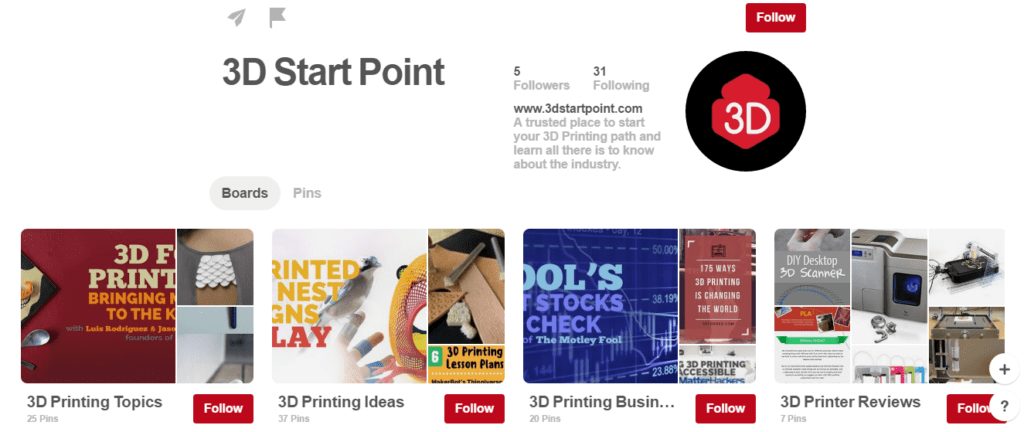
We’ve started switching over to our new 3D Start Point Pinterest page from our Hazz Design 3D Printing page.
Important Links
- Aniwaa 3D Printing Ecosystem Printers, Scanners, and Software
- 3D Start Point on Facebook
- 3D Start Point on Pinterest
Listen | Download | View
Hear the episode of the WTFFF?! Podcast by using the player above OR click to download any episode.
Help Us Help You!
Have some feedback? Leave a comment below. We will read and respond
Please also review us on iTunes and share via the social media of your choice.